 © zombiepigs / Flickr · CC BY-NC 2.0
Inti Raymi:
Festival of the Sun
Everything you need to know — at a glance
every year
fortress, Cusco
(noon – 2 pm)
on the day
or free (standing)
minimum
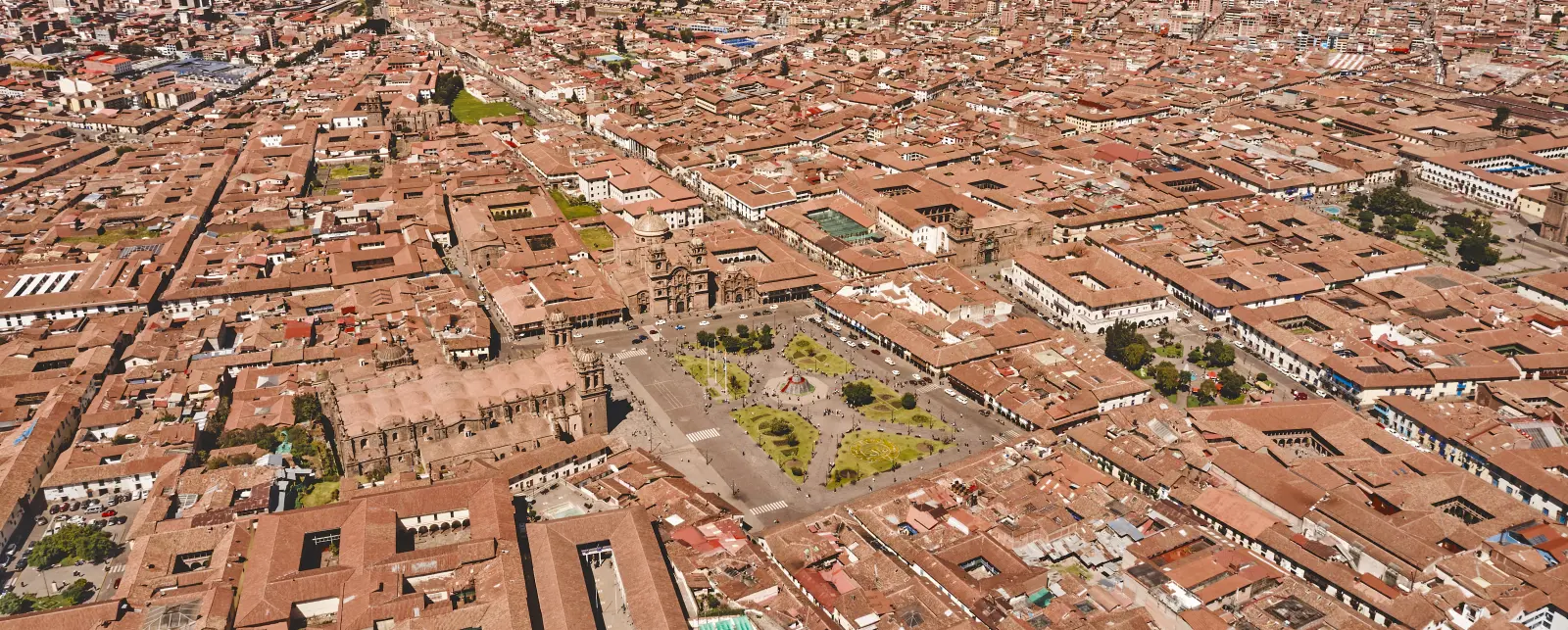
Every June 24, the ancient Inca capital of Cusco transforms into something extraordinary. Tens of thousands of people gather across the city — at a 15th-century temple, in a colonial plaza, and high above the rooftops at a fortress of colossal stone — to witness a ceremony that has endured across five centuries.
Inti Raymi, the Festival of the Sun, was once the most important celebration in the Inca Empire. Suppressed by Spanish colonizers in 1535, it was revived in 1944 and has since grown into one of the largest cultural events in South America. Today it draws travelers from around the world — and for good reason. There is nothing quite like it.
 © zombiepigs / Flickr · CC BY-NC 2.0
An empire's most sacred celebration
In the Quechua language, Inti Raymi means "Festival of the Sun." For the Inca, the sun was not just a celestial body — it was Inti, the supreme deity, the father of the Inca emperor, the source of all life. Each winter solstice in the Southern Hemisphere (around June 21–24), the Inca would gather in Cusco to honour him, to ensure the sun would return, and to give thanks for the harvest.
The ceremony was so central to Inca life that the Spanish banned it outright in 1535, just two years after the conquest of Cusco. For more than four centuries, Inti Raymi survived only in the collective memory of the Andean people.
In 1944, playwright Fabre Pinazo Enríquez reconstructed the ceremony from chronicles left by the Spanish priest Bernabé Cobo and the Inca chronicler Garcilaso de la Vega. The revived festival was performed in Quechua, the original language of the Inca, and it has been held every June 24 since.
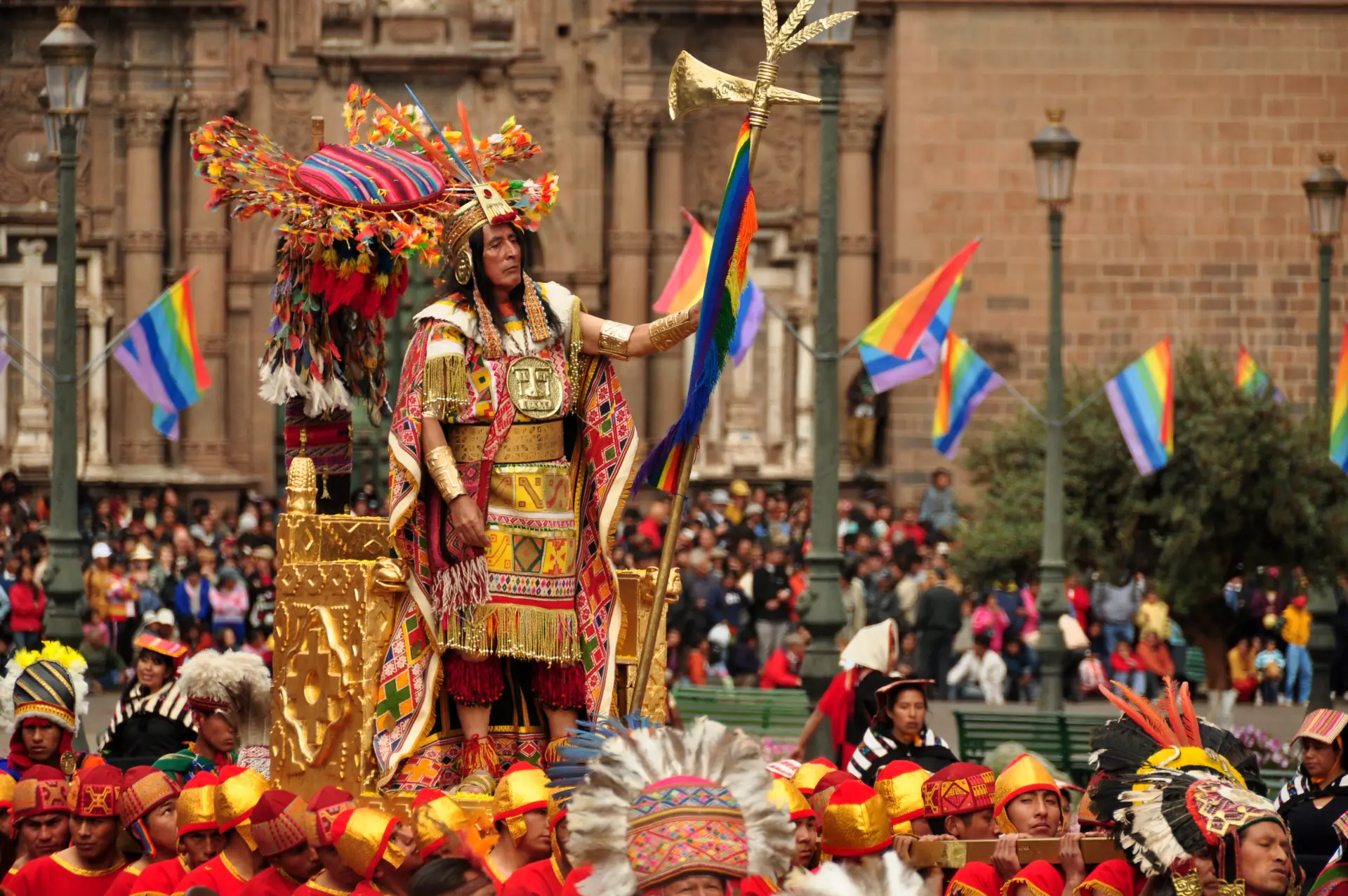
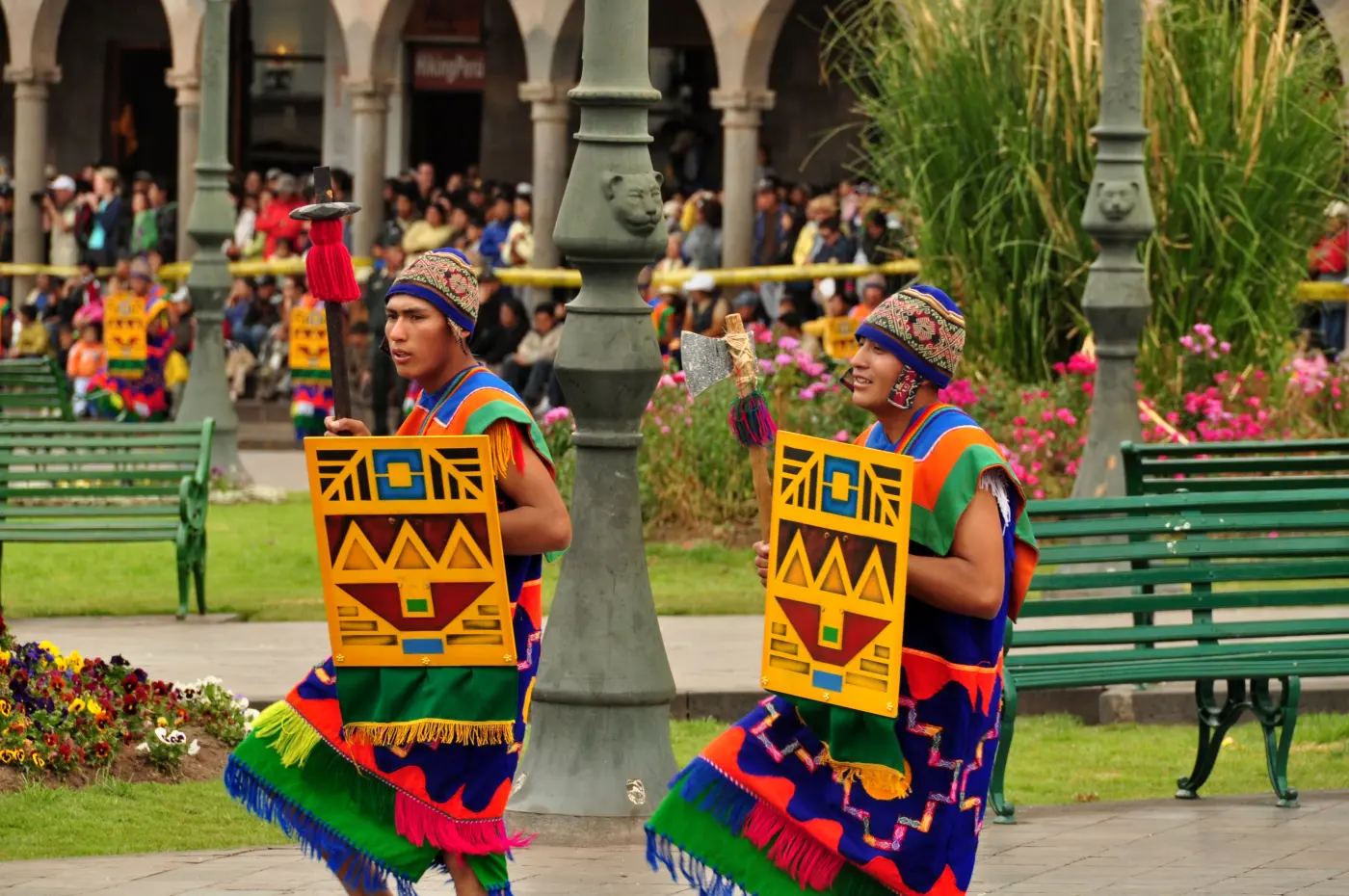
Today, more than 700 actors — all selected through a formal audition process — perform roles that range from the Sapa Inca (emperor) and his court to priests, warriors, and attendants. The costumes are researched and hand-crafted; the script is delivered in Quechua throughout. It is theatre on an epic scale, set against monuments that the Inca themselves built.
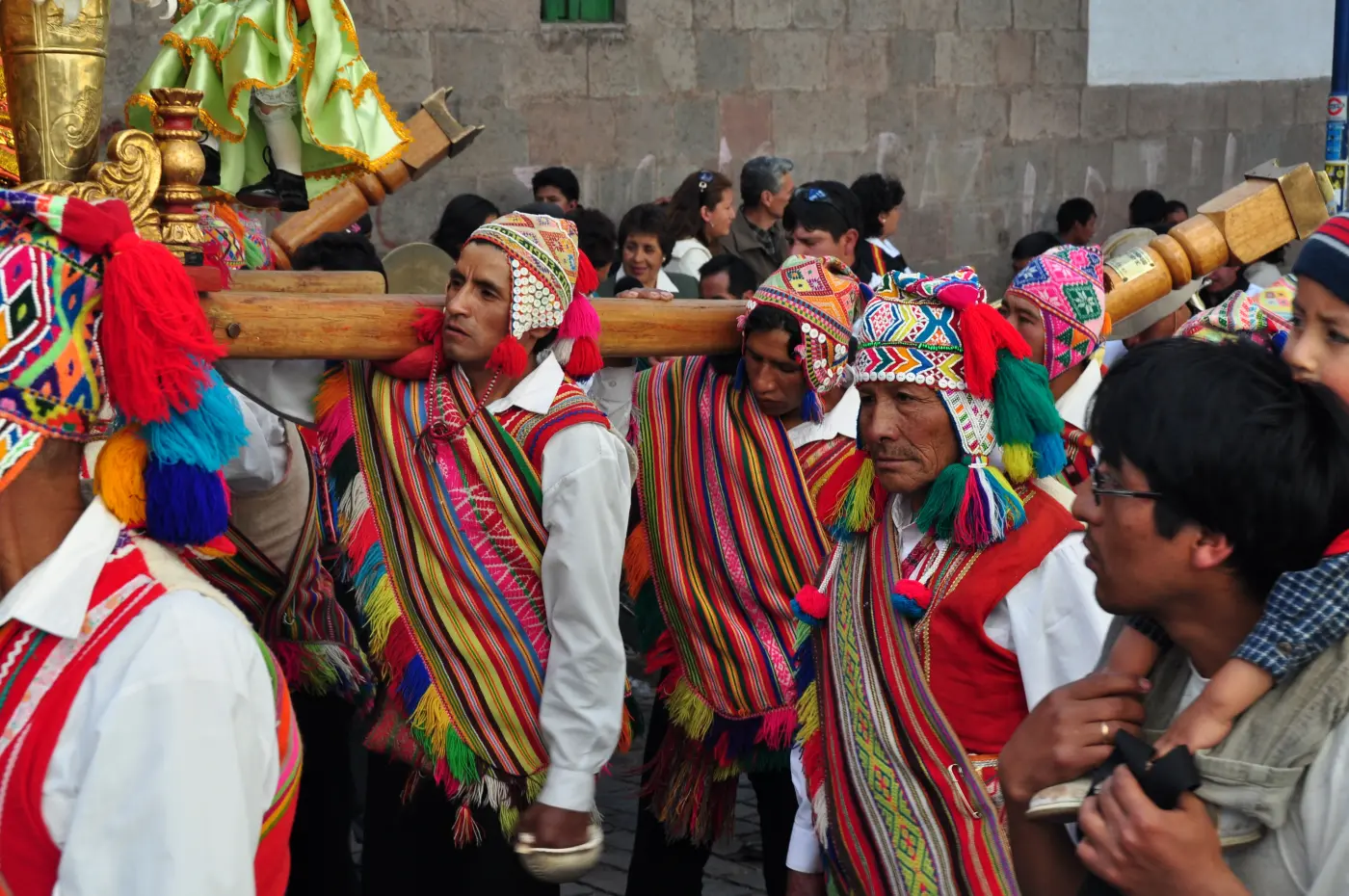
Inti Raymi falls during Cusco's high season — the city is at its liveliest, with the Corpus Christi celebrations typically held the week before. Expect full hotels, busy restaurants, and a city buzzing with energy for several days either side of June 24.
Three acts, three sacred sites
The ceremony unfolds across three locations in Cusco over the course of a full morning and afternoon. Each act builds toward the climax at Sacsayhuamán.
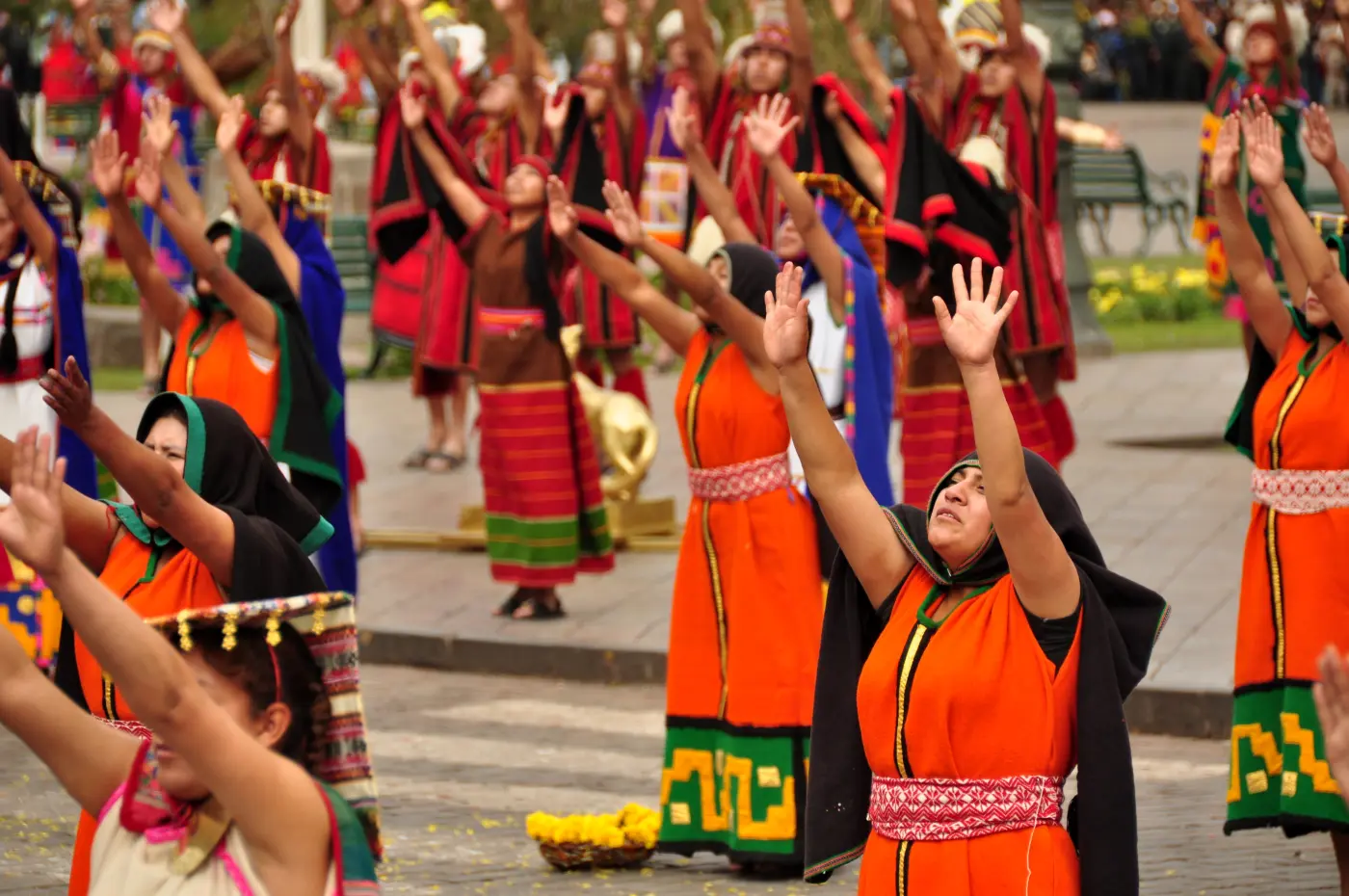
The Temple of the Sun
The ceremony begins at Qorikancha, the most sacred temple in the Inca Empire. Once sheathed in gold, the temple's foundations still stand in the heart of Cusco, beneath the Spanish church of Santo Domingo built on top of them.
The Sapa Inca (the actor portraying the emperor) begins the ceremony here with ritual offerings and the symbolic lighting of sacred fire. The procession then moves through the streets of Cusco toward the Plaza de Armas.
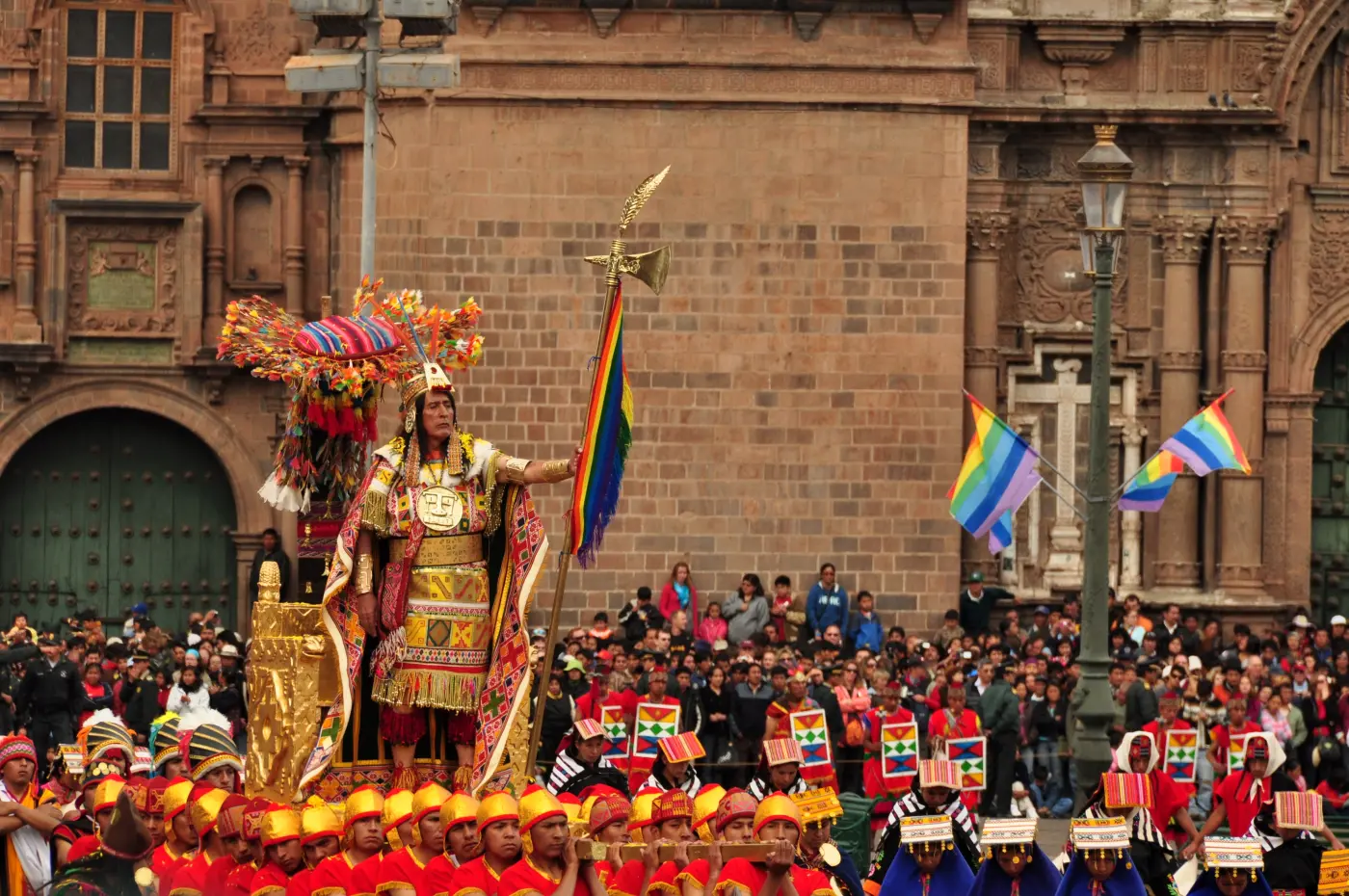
The Heart of Cusco
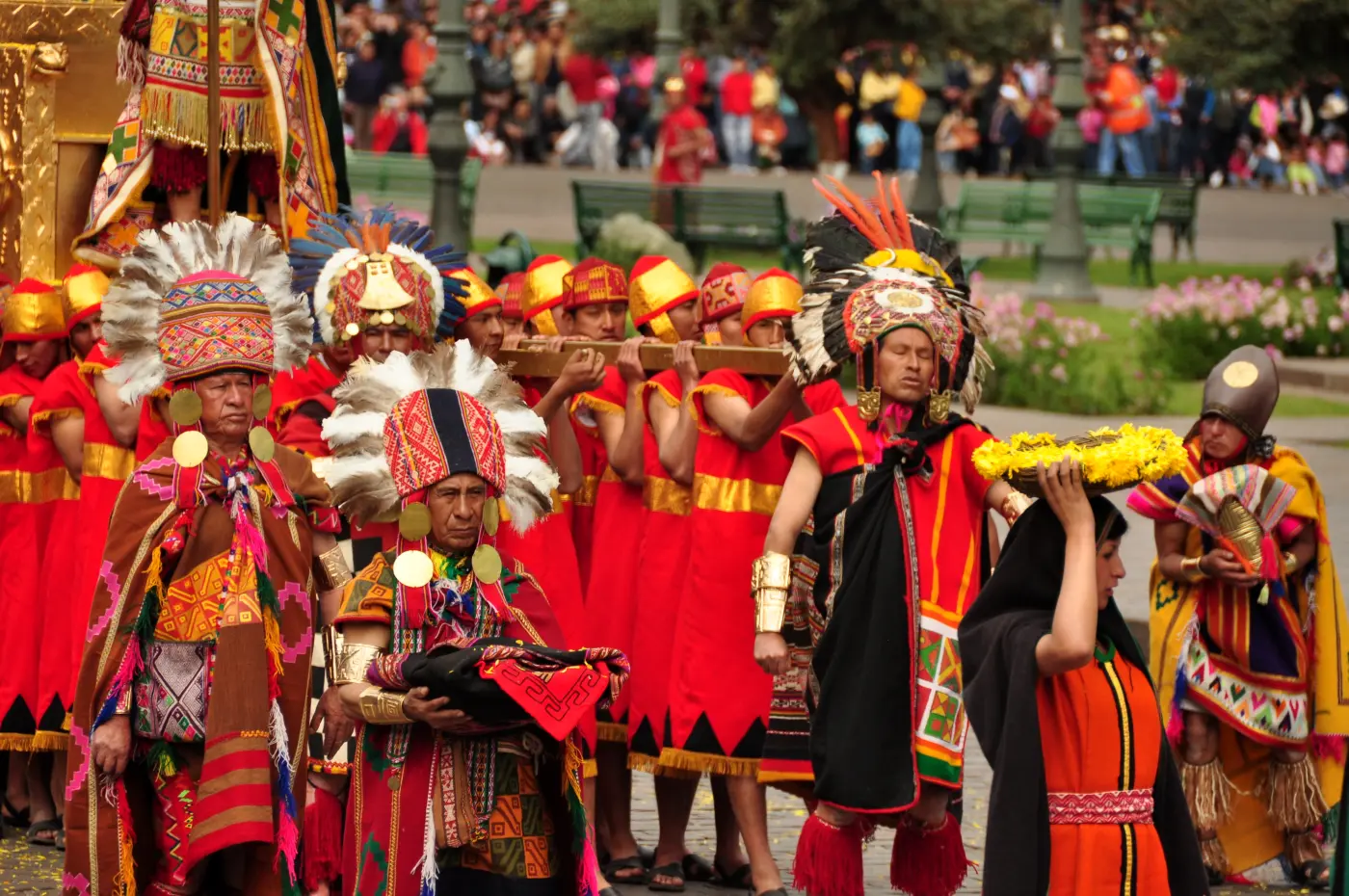
The imperial procession arrives at Plaza de Armas, where the Sapa Inca addresses the crowd in Quechua from a ceremonial litter carried by his attendants. This is the most accessible part of the festival — and one of the most visually striking.
The plaza fills with thousands of spectators. Balconies are rented out weeks in advance. The costumes — woven textiles, gold headdresses, ceremonial staffs — are extraordinary up close.
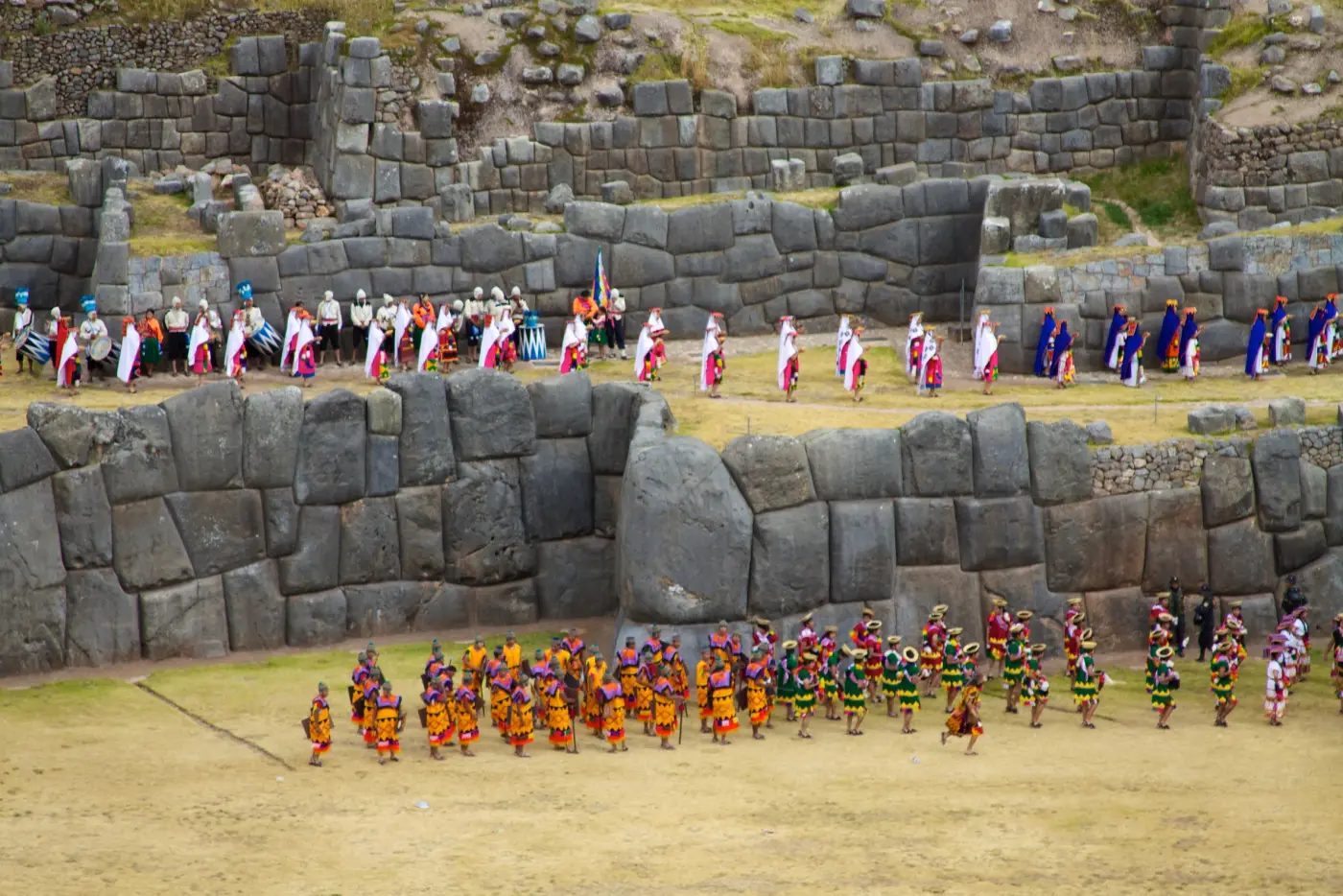
The Grand Finale
The climax of Inti Raymi takes place at Sacsayhuamán, the massive Inca fortress overlooking Cusco at 3,700 m altitude. On the open esplanade in front of its cyclopean walls, the main ceremony unfolds: offerings to Inti, the ritual of sacred fire, prayers in Quechua, and the grand theatrical performance with the full cast of 700+.
This is what most visitors come for. The scale — the fortress, the mountains, the thousands of spectators — is genuinely moving.
Where to watch — and what it costs
The main ceremony at Sacsayhuamán offers both paid tribune seating and free hillside viewing. Each option has real trade-offs.
Hillside at Sacsayhuamán
The natural hillside surrounding the esplanade offers a panoramic view of the entire ceremony. The perspective is wide — you see the full stage, the crowds, the fortress walls behind.
- Arrive before 10 am for a good spot
- Bring binoculars for detail
- No seat — standing or on the grass
- Best for wide-angle photography
- Can leave freely before the crowd
Tribune Seats — Sacsayhuamán
Designated seating areas inside the esplanade perimeter place you much closer to the performance. There are two main zones — Tribuna and Preferente — with different distances and sightlines.
- Numbered seats, reserved in advance
- Closer to the stage than the hillside
- Shade is limited — bring sunscreen
- Official tickets via Cusco Ministry of Culture
- Sell out 3–5 months in advance
Plaza de Armas Balconies
Several restaurants and hotels around the Plaza de Armas rent their balconies for Act II. You get an elevated, close-up view of the procession and the Sapa Inca's address — often with breakfast included.
- Best view of the plaza procession
- Covered and comfortable
- Book directly with restaurants — months ahead
- Does not cover the Sacsayhuamán ceremony
- Worth combining with a hillside spot for the full day
Only buy tickets through official channels — the Dirección Desconcentrada de Cultura de Cusco (Ministry of Culture) or authorised agents. Third-party resellers and street sellers are common and often sell invalid tickets. Prices significantly above official rates should raise a flag. We handle ticket procurement for all our clients as part of their itinerary.
 © zombiepigs / Flickr · CC BY-NC 2.0
How to build your trip around Inti Raymi
Inti Raymi is a fixed date. Everything else — arrival, acclimatisation, surrounding experiences — should be planned backward from June 24.
When to arrive
Altitude is the single most important factor. Cusco sits at 3,400 m — arriving the day before and expecting to be comfortable on June 24 is a common and expensive mistake. Plan to arrive at least 3–4 days early to acclimatise properly.
Use those days wisely: the Sacred Valley (at lower altitude) is an excellent acclimatisation base, and Ollantaytambo, Pisac, and Chinchero are all within easy reach.
If you plan to combine Inti Raymi with Machu Picchu, do Machu Picchu first (lower altitude, then return to Cusco to acclimatise upward). Many travellers make the mistake of doing it the other way around.
Booking timeline
What to know before you go
Inti Raymi is a logistically demanding day. These are the details that make the difference between a frustrating experience and an unforgettable one.
Acclimatise first
Altitude sickness at 3,400 m is real. Rest for 1–2 days on arrival, drink coca tea, stay hydrated, and avoid alcohol the first night. If you fly in from sea level, the effect can be significant.
Start early
The procession from Qorikancha begins at 8 am, but crowds build from 6 am. For Sacsayhuamán, free spots on the hillside fill by 10 am. The day is long — pace yourself and carry snacks and water.
Layer up
Cusco in June is dry but cold in the morning (5–8°C at dawn). By midday at Sacsayhuamán you'll be in full sun at 3,700 m. Dress in layers, bring a hat, and don't forget high-SPF sunscreen — the UV at altitude is intense.
Travel light
Pickpocketing increases significantly in large festival crowds. Use a crossbody bag worn in front, keep phones in inside pockets, and don't bring anything you can't afford to lose. Leave valuables at the hotel.
Photography
The costumes and setting are spectacular. Tribune ticket holders are closer to the action; hillside viewers have a wider panoramic angle. A zoom lens is valuable. Drone use is prohibited at Sacsayhuamán.
Getting around
On June 24, central Cusco is largely closed to vehicles. Sacsayhuamán is a 30-minute walk uphill from the Plaza de Armas. Taxis and tuk-tuks operate but expect long waits and surge pricing. Walk when you can.
Weather
June is the heart of Cusco's dry season — sunny days are the norm, but morning frost is possible and afternoon clouds often roll in. Rain is unlikely but not impossible. Bring a light rain layer just in case.
Book restaurants early
Cusco's best restaurants are fully booked weeks before June 24. If you have specific dining plans — especially for the evening of the festival — reserve well in advance. Street food near Sacsayhuamán is plentiful on the day.
Experience Inti Raymi the right way
Tickets, logistics, acclimatisation, and the perfect surrounding itinerary — we handle every detail so you can be fully present for one of the most extraordinary events in South America.
Frequently asked questions