When travelers picture Peru, the first images that usually come to mind are Machu Picchu, the Andes and perhaps the Amazon rainforest. But head south from Lima and, within just a few hours, the scenery changes completely.
Here, the Andes give way to a vast coastal desert. Golden dunes stretch toward the horizon, dramatic cliffs drop into the Pacific Ocean, sea lions gather on rocky islands and an oasis appears unexpectedly among enormous sand dunes.
Welcome to Paracas and Huacachina, two very different destinations that combine perfectly into one of the most exciting additions to a Peru itinerary.
Whether you are looking for wildlife, spectacular landscapes, adventure or simply something completely different from the mountains, Peru’s southern coast deserves a place on your journey.
Why visit Paracas and Huacachina?
One of the things that makes traveling through Peru so fascinating is how dramatically the landscape can change.
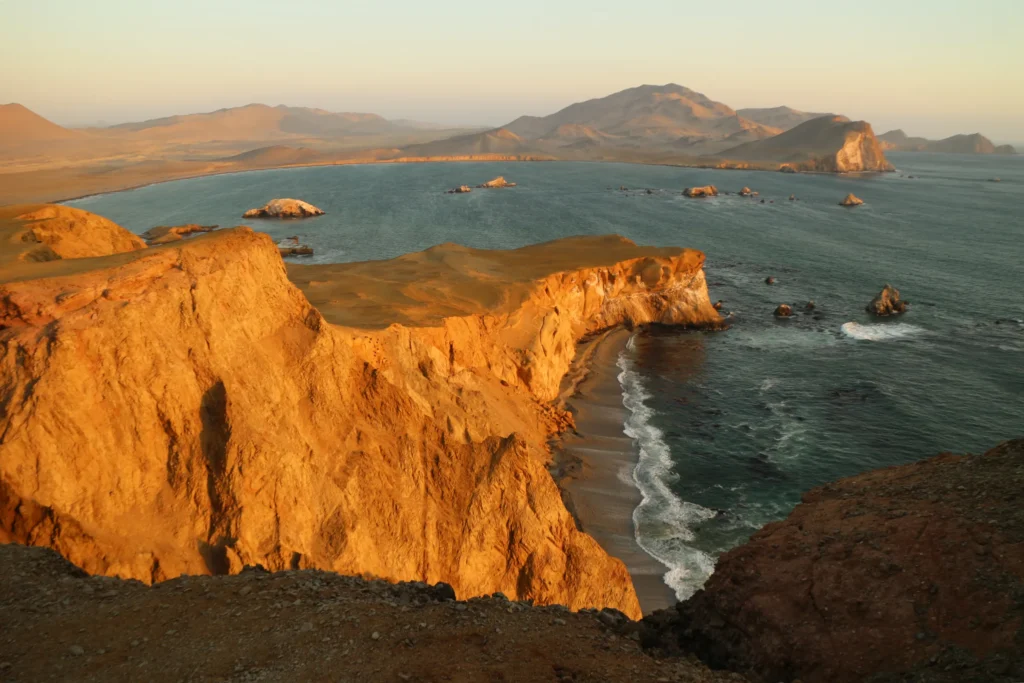
Paracas sits where the coastal desert meets the Pacific Ocean, creating a striking landscape of dunes, cliffs, beaches and marine ecosystems. The Paracas National Reserve protects 335,000 hectares, around 65% of which are marine waters. SERNANP records 216 bird species, 36 mammal species and 168 fish species within the reserve.
Continue south toward Ica and the ocean disappears behind the desert. Just outside the city lies Huacachina, a small lagoon surrounded by palms and some of the most impressive dunes on Peru’s coast.
The result is a surprisingly diverse journey that can easily be incorporated into a trip between Lima and southern Peru.
Paracas: where the desert meets the Pacific
Approximately four hours south of Lima by road, Paracas feels worlds away from the capital.
The small coastal town is the gateway to two of the region’s highlights: the Ballestas Islands and the Paracas National Reserve.
You could rush through in a day, but spending at least one night gives you time to enjoy both without turning the experience into a race.
Take a boat to the Ballestas Islands
For many travelers, the day begins on the water.
Boats depart from Paracas toward the Ballestas Islands, a group of rocky islands home to important colonies of marine wildlife.
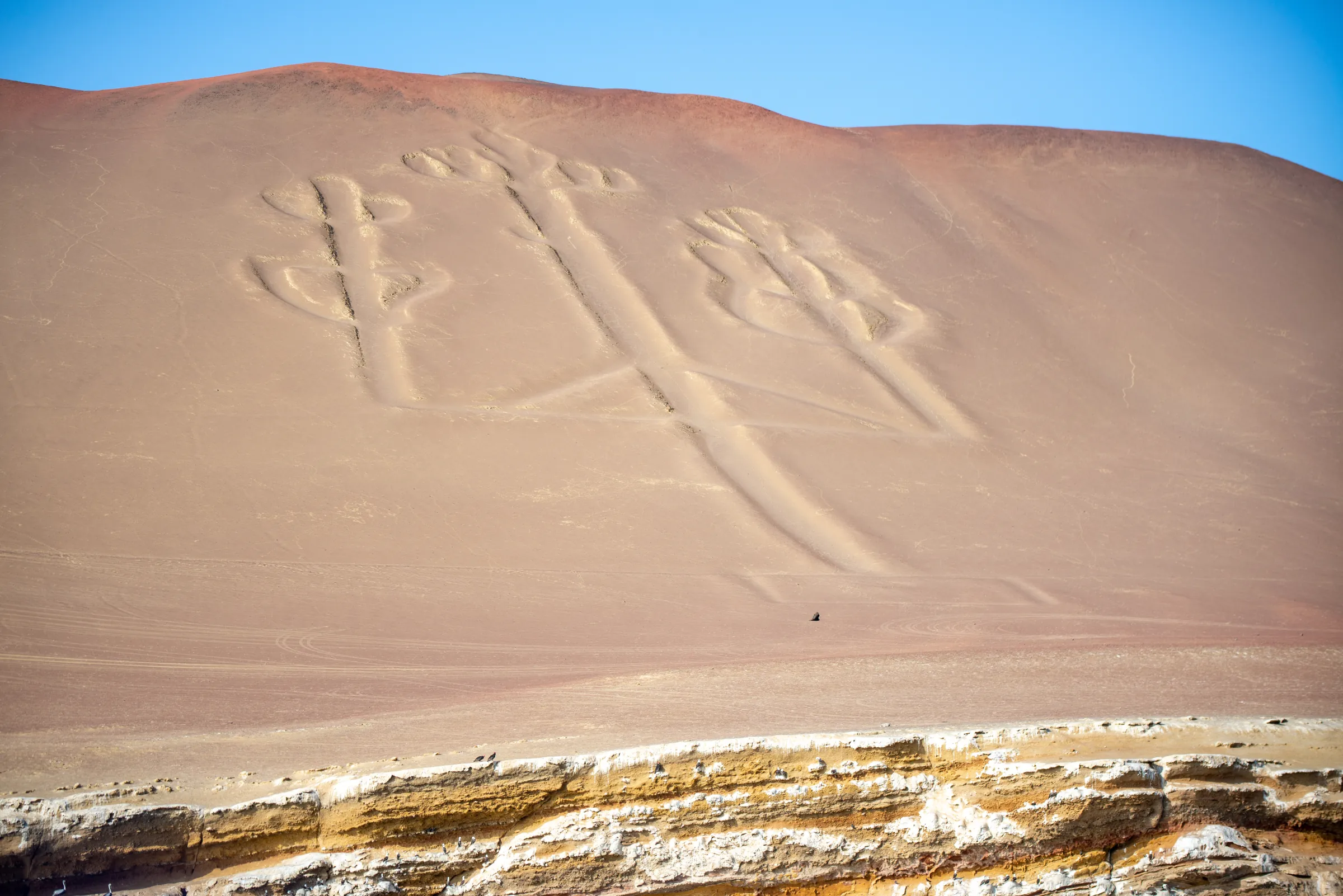
Along the way, you can see the mysterious Candelabro, an enormous geoglyph carved into a desert hillside overlooking the ocean. Its exact purpose remains uncertain.
Once you reach the islands, the landscape becomes surprisingly lively.
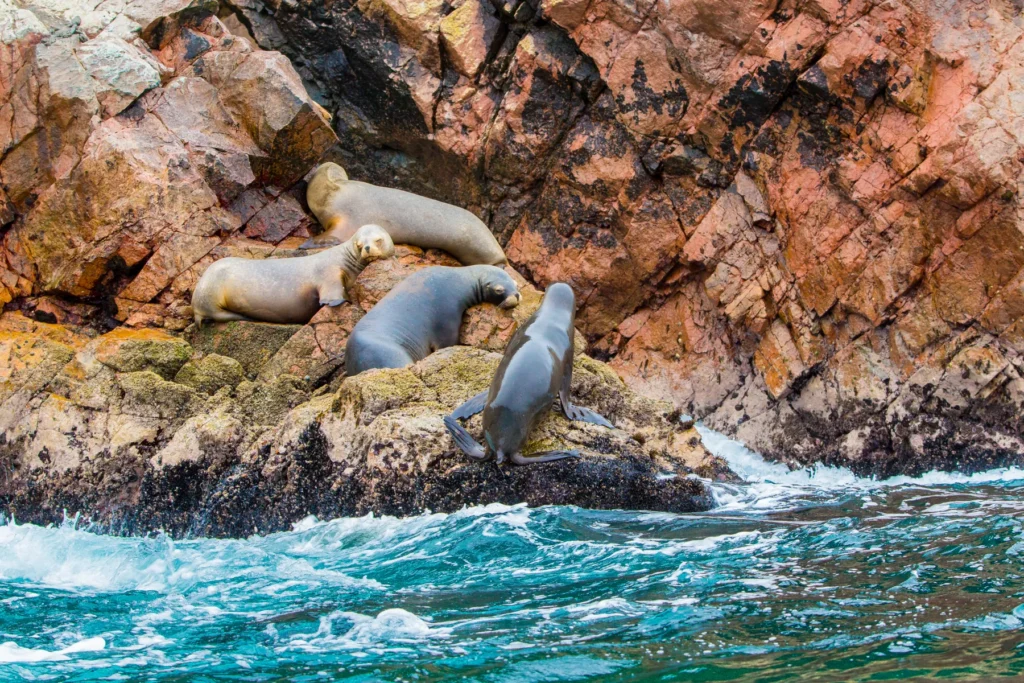
Sea lions rest across the rocks while seabirds circle overhead. Pelicans and guano birds are commonly observed here, and the islands are also home to the Humboldt penguin, a species many first-time visitors are surprised to discover in Peru. Peru Travel
You remain aboard the boat rather than landing on the islands, allowing you to observe the wildlife while limiting disturbance to this protected environment.
For nature lovers, it is one of the easiest wildlife experiences to add to a classic Peru itinerary.
Explore the Paracas National Reserve
The Ballestas Islands may receive much of the attention, but you should not leave Paracas without exploring the national reserve itself.
This is where the region becomes truly spectacular.
The landscape is almost empty: vast stretches of ochre desert, enormous cliffs and the deep blue Pacific appearing suddenly beyond the dunes.
Several viewpoints and beaches can be visited along the reserve’s tourist circuit, including Playa Roja, known for the unusual reddish color of its shoreline, as well as La Mina, Yumaque and viewpoints overlooking the peninsula.
There is very little vegetation, and that is precisely part of the beauty.
Few places demonstrate Peru’s geographical diversity quite as clearly as standing in the middle of a desert while looking directly over the Pacific Ocean.
How much time do you need in Paracas?
For most first-time visitors, we recommend one full day and one night at minimum.
A typical stay could look like this:
Day 1: Travel from Lima to Paracas, explore the National Reserve and enjoy sunset near the coast.
Day 2: Morning boat trip to the Ballestas Islands, then continue toward Ica and Huacachina.
If you prefer slower travel, enjoy photography or want more time around the coast, adding another night can make the experience much more relaxed.
Huacachina: an oasis surrounded by giant dunes
After the wildlife and Pacific landscapes of Paracas, your next stop could hardly feel more different.
Travel inland toward Ica and you arrive in Huacachina, a lagoon surrounded by palms, restaurants and hotels — with enormous dunes rising immediately behind it.
Peru Travel describes Huacachina and the surrounding subtropical desert as a protected conservation area with its own desert biodiversity. The oasis lies only around 15 minutes from Ica. From ground level, Huacachina is picturesque.
Climb the dunes, however, and you begin to understand what makes the place special.
Suddenly, the small oasis sits far below you while an apparently endless desert stretches toward the horizon.
Ride across the dunes
Huacachina is not just somewhere to admire the desert.
It is somewhere to experience it.
Excursions into the surrounding dunes take travelers deep into the desert, where the scale of the landscape becomes much more apparent.
For travelers looking for adrenaline, sandboarding is one of Huacachina’s signature activities and is promoted by Peru’s official tourism authorities as one of the main experiences around the oasis
Sliding down a huge dune surrounded by nothing but sand is probably not the experience most people imagine when planning their first trip to Peru — which is exactly why it can become such a memorable one.
Stay for sunset
Whatever activities you choose, try not to leave Huacachina too early.
Late afternoon is arguably when the desert is at its best.
As the sun drops, temperatures become more comfortable and the dunes gradually turn from pale gold to deep orange.
Climb to one of the higher dunes above the oasis and watch the shadows stretch across the desert.
Then look back toward Huacachina below.
From above, the contrast is remarkable: a tiny patch of water and palm trees completely surrounded by sand.
It is one of those landscapes that hardly looks real until you are standing in it.
Don’t forget Ica: Peru’s wine and pisco country
There is another reason not to rush through this region.
Ica is one of the most important areas for Peruvian wine and pisco production, and visiting a local vineyard or bodega adds a completely different experience to a Paracas and Huacachina itinerary. Peru’s official tourism portal specifically highlights the region’s wine and pisco tradition alongside its desert attractions. Peru Travel
A tasting gives you the chance to learn more about pisco, Peru’s famous grape spirit and the base of the iconic Pisco Sour.
It also provides a welcome change of pace after boats, wildlife and dune adventures.
In just two days, you can therefore move from the Pacific Ocean to a protected desert reserve, observe marine wildlife, cross enormous dunes and finish among vineyards.
That diversity is exactly what makes this part of Peru so rewarding.
Paracas or Huacachina: which should you visit?
If your itinerary allows it, the answer is simple: both.
They offer completely different experiences.
Choose Paracas for wildlife, the Pacific Ocean, dramatic coastal landscapes and the Ballestas Islands.
Choose Huacachina for desert scenery, sandboarding, dune adventures and sunset.
But combining them is what makes the journey particularly interesting.
Instead of traveling several hours simply to see one attraction, you experience two completely different sides of Peru within the same region.
How many days do you need for Paracas and Huacachina?
For most travelers, two to three days works very well.
2-day itinerary
Day 1 — Lima → Paracas
Travel south from Lima and spend the afternoon exploring the Paracas National Reserve.
Day 2 — Ballestas Islands → Huacachina
Take a morning boat excursion to the Ballestas Islands, continue toward Ica and spend the afternoon exploring Huacachina and its dunes.
This is possible, but it is a fairly active itinerary.
3-day itinerary
For a more comfortable experience:
Day 1: Lima → Paracas + National Reserve
Day 2: Ballestas Islands → Ica → Huacachina + desert sunset
Day 3: Winery or pisco experience around Ica before continuing your journey
This gives you more time to actually enjoy each destination instead of simply checking it off your list.
When is the best time to visit Paracas and Huacachina?
Both destinations can be visited throughout the year. SERNANP lists the Paracas National Reserve as a year-round destination, while Ica is known for its dry desert climate. Visita Aires Naturels
Conditions vary between the coast and desert, and Paracas can be particularly windy, so layers are useful even when the sun is strong.
Whatever the season, sun protection is essential. Sunglasses, sunscreen and a hat are particularly useful in both Paracas and Huacachina, where shade can be limited. Official visitor guidance also recommends sun protection for excursions around Paracas. Peru Travel
Can you visit Paracas and Huacachina from Lima?
Yes — and that is one of their biggest advantages.
Paracas is roughly four hours south of Lima by road, while Lima to Ica takes around four to five hours depending on the route and traffic. Huacachina is then only around 15 minutes from Ica.
Day trips from Lima are possible, but we generally prefer incorporating the region into a longer itinerary.
Trying to see Paracas, the Ballestas Islands and Huacachina in a single day means spending a significant part of the experience in transit.
If your schedule allows, slow it down.
Where do Paracas and Huacachina fit into a Peru itinerary?
This is where these destinations become particularly interesting for international travelers.
Paracas and Huacachina can work beautifully near the beginning of a longer journey through southern Peru.
For example:
Lima → Paracas → Huacachina/Ica → Arequipa → Colca Canyon → Cusco → Sacred Valley → Machu Picchu
This creates an extraordinary progression of landscapes.
You begin beside the Pacific, cross the coastal desert, continue toward volcanic southern Peru and eventually climb into the Andes.
Alternatively, travelers short on time can visit Paracas and Huacachina as a two- or three-day extension from Lima before flying onward to Cusco.
Either way, they add something very different to the classic Peru experience.
Are Paracas and Huacachina worth visiting?
If your idea of Peru begins and ends with the Andes, absolutely.
Paracas and Huacachina reveal a side of the country that many first-time visitors do not expect.
In Paracas, desert cliffs plunge toward the Pacific while sea lions and Humboldt penguins inhabit islands offshore.
A few hours later, you can be standing on top of a giant dune watching the sun disappear behind the desert.
And that contrast is part of what makes Peru such an extraordinary destination.
You do not need to choose between history, wildlife, landscapes and adventure.
With the right itinerary, you can experience all of them.
Ready to discover another side of Peru?
At Majestic Andes, we create tailor-made journeys that go far beyond simply connecting Peru’s famous landmarks.
Whether you want to combine Lima, Paracas and Huacachina with Arequipa and Cusco, add a few days of coastal adventure before Machu Picchu, or build a completely personalized journey through Peru, we can design an itinerary around the experiences that matter most to you.
Let’s create your Peru journey. 🇵🇪